


Men’s casual polo shirts occupy a rare position in the modern wardrobe. They are more structured than a basic T-shirt, yet more relaxed than a dress shirt. That balance allows the same garment to work across golf, commuting, travel, casual offices and weekend social settings.
The reason is simple: a polo combines T-shirt comfort with the cleaner neckline of a collared shirt. Fit, collar geometry, fabric surface and color can then shift the same basic silhouette from sporty to smart. BIEMLOFEN’s Little Collar Polo illustrates this crossover approach through a refined mini-collar, fitted silhouette, multiple color options and fabric engineered for repeated wear.
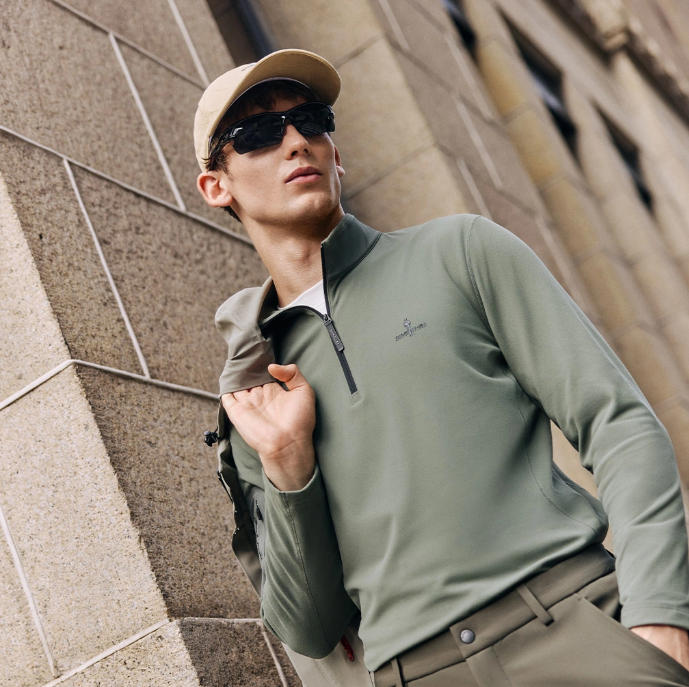
A crew-neck T-shirt usually communicates ease and informality. A traditional button-up shirt introduces more structure and formality. The polo sits naturally between the two.
Its knitted body retains the softness and movement associated with casual clothing, while the collar and placket create a more defined neckline. That combination explains why polos appear in such different environments.
On a golf course, the collar connects with traditional golf style while the body needs enough freedom for movement. In a casual workplace, a clean solid-color polo can look more considered than a T-shirt without feeling excessively formal. During travel or weekends, the same shirt can work with chinos, shorts or lightweight outerwear.
In short:
A men’s casual polo shirt bridges casual and smart dressing by combining the comfort of a T-shirt with the structured neckline and cleaner silhouette of a collared shirt.
That versatility is one reason the polo has remained relevant even as menswear trends continue to change.
“Casual polo” and “smart polo” are not always two completely separate product categories. Often, the difference comes from how several design elements work together.
| Detail | More Casual Polo | Smarter Polo |
|---|---|---|
| Fit | Relaxed | Cleaner / more fitted |
| Collar | Soft or traditional | More structured |
| Color | Bright, graphic or casual | Solid or controlled |
| Placket | More visible | Minimal or concealed |
| Fabric surface | More casual texture | Cleaner finish |
| Styling | Shorts / sneakers | Trousers / loafers |
This helps explain why men’s smart polo shirts can still feel comfortable and relaxed. A neater collar, cleaner placket and slightly more controlled fit can change the overall impression without changing the fundamental polo construction.
Color matters too. Navy, white, black and other restrained shades often feel more polished, while brighter colors make the same silhouette look more recreational or expressive.
The smartest polo is therefore not necessarily the most formal-looking one. It is usually the design in which fit, color and detail feel controlled rather than overly casual.
Fit can move a polo from relaxed weekend clothing to a much sharper lifestyle piece.
The shoulder line establishes the upper-body structure. If it sits too far down the arm, the shirt may appear oversized; if it is excessively tight, movement can become restricted. Through the chest, a good polo should follow the body without pulling noticeably during normal movement.
Waist shaping also changes the visual character. Men’s fitted polo shirts generally use a cleaner line through the torso, creating a more defined silhouette than a traditional loose-cut polo.
BIEMLOFEN states that the cut of its Little Collar Polo was developed using data from a large number of body shapes, with the waistline adjusted to create a more upright and slimming visual effect.
Sleeve and overall body length matter as well. Shorter, cleaner sleeves can make the upper body appear more defined, while shirt length affects whether a polo looks natural worn untucked or works better tucked into trousers.
Good fit is therefore not simply about choosing a smaller size. It is about proportion.
The collar occupies only a small percentage of the garment, yet it can strongly influence whether a polo feels traditional, sporty or contemporary.
Collar height affects the neckline. Collar-leaf length changes how dominant the collar appears, while collar angle influences how the garment frames the neck and upper chest. Placket construction adds another visual element: a highly visible placket feels different from a cleaner concealed design.
BIEMLOFEN’s Little Collar Polo T-shirt uses a patented mini-collar construction with an approximately 5 cm collar leaf, 75-degree collar angle and concealed button placket.
These are relatively small geometric changes, but together they create a noticeably cleaner neckline.
This leads to an important style principle:
A polo collar occupies only a small area of the garment, but its angle, height and structure strongly influence how formal, sporty or contemporary the entire shirt appears.
Collar shape retention matters for the same reason. Once the collar begins to curl or distort, the entire polo can immediately look less refined.
One of the strengths of a casual polo is that the garment can change character without needing to change completely.
On the golf course, it can be paired with golf trousers or shorts for a clean athletic silhouette. For a casual office, a solid-color polo with tailored trousers creates a more polished appearance while remaining less formal than a shirt and tie.
At the weekend, chinos, shorts and sneakers move the same polo toward casualwear. During travel, adding a lightweight jacket creates a practical layered outfit without making the clothing feel overtly sporty. At a resort, brighter colors can create a more relaxed mood.
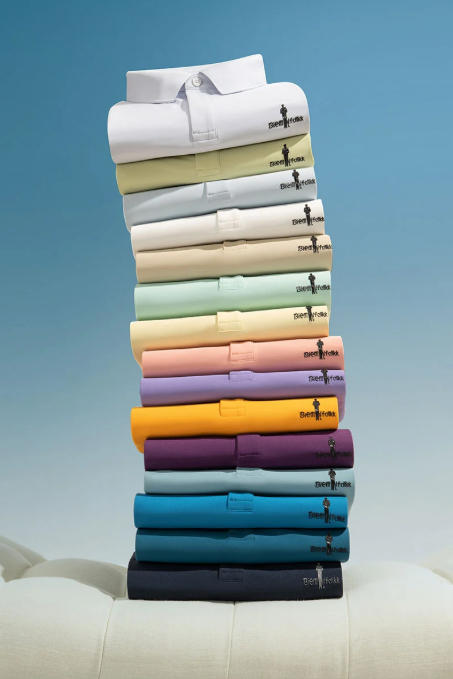
BIEMLOFEN currently offers its Little Collar Polo in 20 colors and explicitly presents the design as suitable for multiple outfit scenarios.
That versatility is central to the modern polo’s appeal: styling can change the context even when the garment remains the same.
A casual polo does not need to look like technical sportswear for fabric performance to matter.
Everyday wear exposes a shirt to repeated movement, washing, summer heat, sunlight and wrinkles. Over time, the more useful questions become whether the fabric recovers after stretching, whether dimensions remain stable and whether the collar and color retain their original appearance.
BIEMLOFEN states that its BT-Gritty fabric maintains high elasticity after repeated wear-and-wash testing, with dimensional changes of less than 1%. The company also reports high colorfastness, machine-washable wrinkle resistance and UPF50+ performance remaining after its stated testing cycle.
These features matter even outside sport. A polo that works across golf, commuting and travel is likely to be worn frequently, so long-term shape and appearance become part of everyday versatility.
The enduring appeal of men’s casual polo shirts comes from balance.
They are relaxed enough for everyday wear, structured enough for smarter settings and versatile enough to move between golf, work, travel and weekends. Fit determines whether the silhouette feels loose or refined, collar geometry shapes the neckline, and fabric recovery helps preserve that appearance over time.
That is why the polo continues to work from golf course to city: it does not belong exclusively to either sportswear or smart casual clothing. It comfortably occupies the space between them.
A relaxed fabric feel, comfortable fit and easy styling usually make a polo more casual, although collar, color and placket design also influence its appearance.
A smart polo usually has a cleaner fit, more structured collar, restrained colors and refined details, while a casual polo may use a looser fit and more relaxed styling.
It should follow the shoulders, chest and waist without excessive pulling or extra fabric, while still allowing comfortable movement.
Yes, in many smart-casual environments. A solid-color polo with clean trousers and understated footwear can create a polished but relaxed outfit.
Yes, provided it allows sufficient movement and meets the dress requirements of the individual golf course.
Elastic recovery, dimensional stability and durable collar construction help a polo preserve its fit and structure through repeated wear and washing.
Biemlofen Building, 608 Xingye Dadao East, Panyu District,
Guangzhou City, Guangdong Province, China.
+86-020-34765888

 English