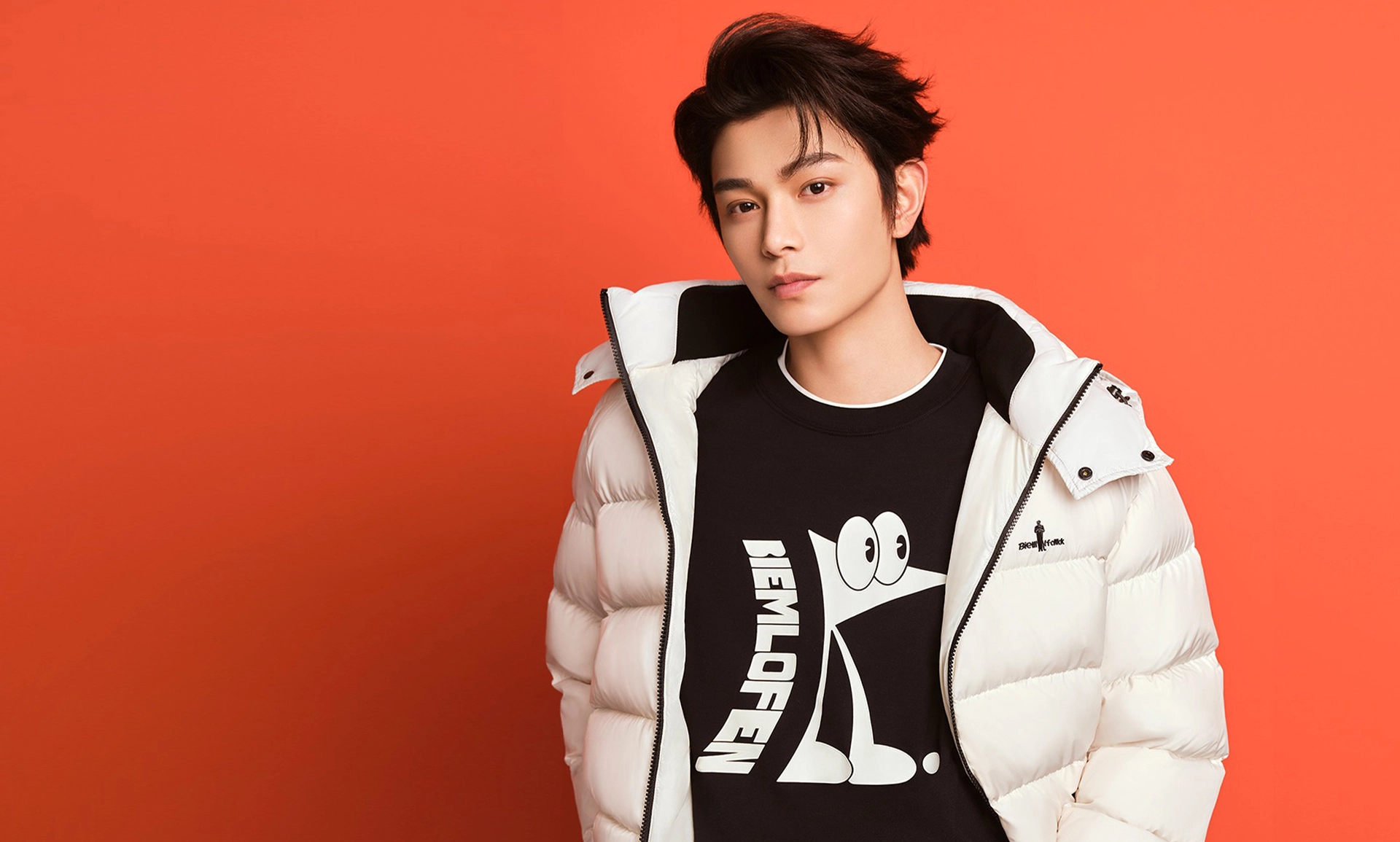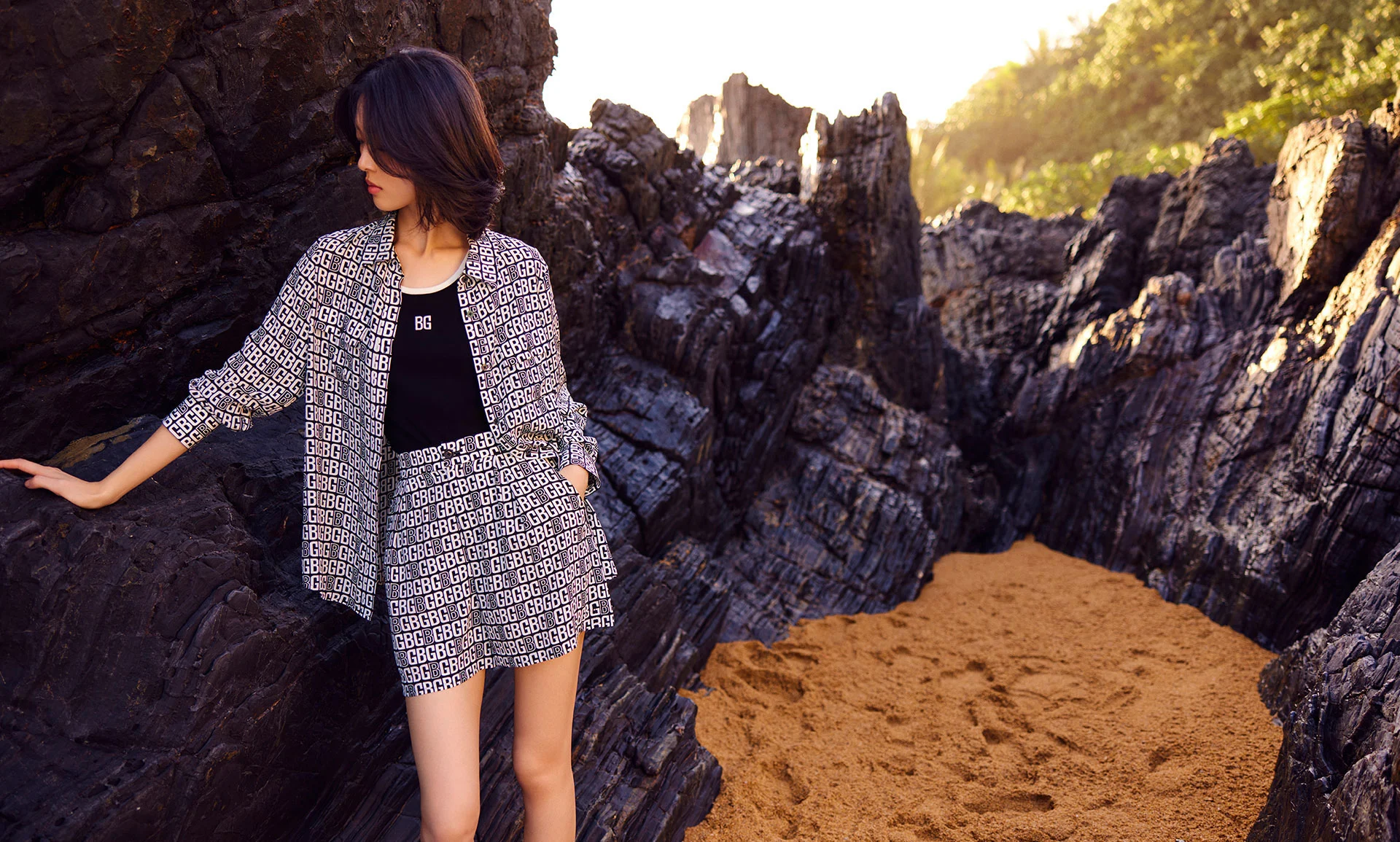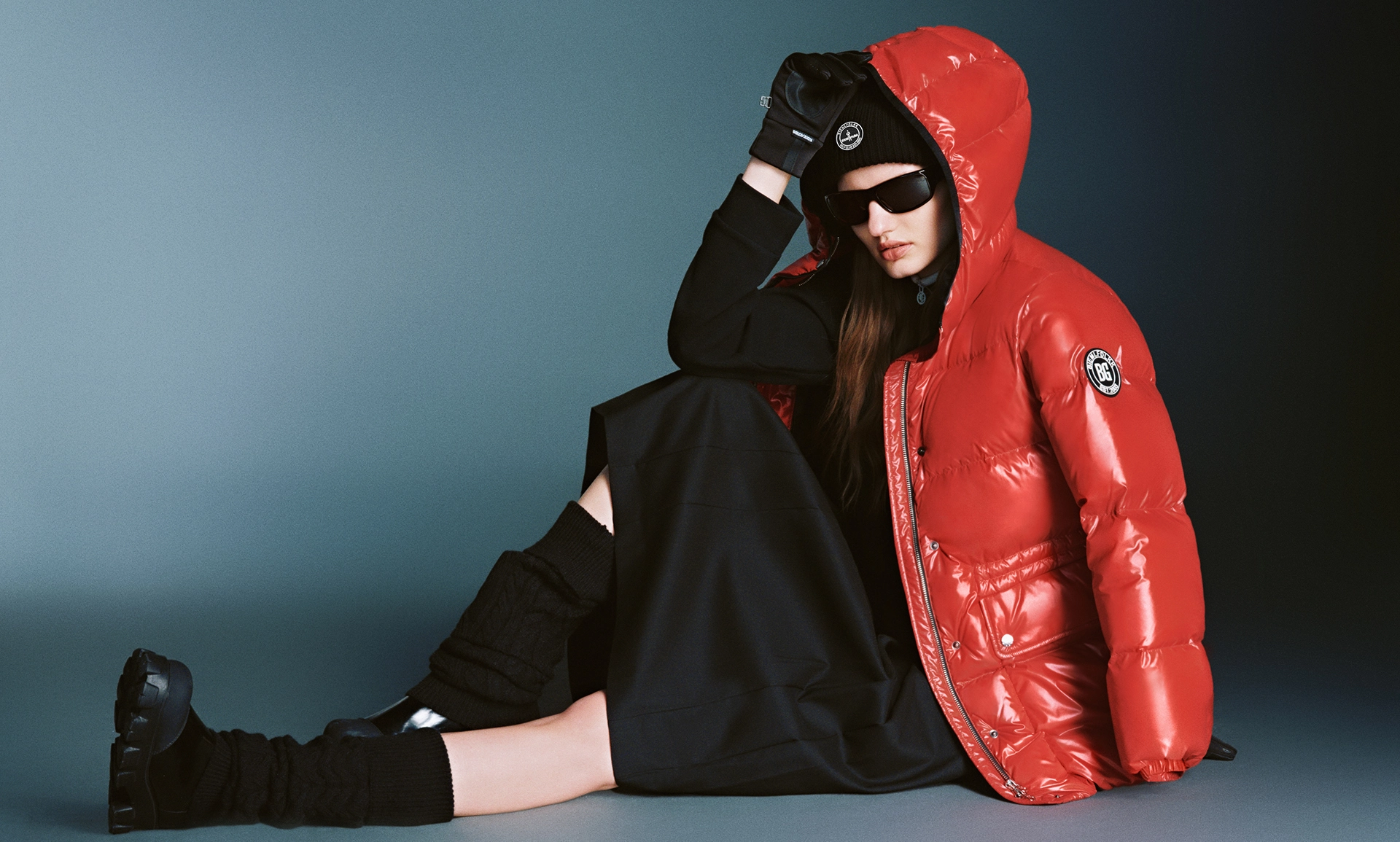



A branded golf hat may be one of the smallest pieces in a golfer’s wardrobe, yet it carries an unusually large visual role. It sits at eye level, remains visible throughout a round and can combine shade, comfort, color and brand identity in a single accessory.
That is why modern branded golf hats are about more than placing a logo on the front of a cap. Construction affects breathability and fit, while embroidery, color, hardware and silhouette help communicate identity. BIEMLOFEN’s current hat range reflects this combination by bringing outdoor-oriented functional construction together with golf aesthetics and everyday styling.
The most obvious role of a golf hat is practical. A brim provides shade, while a comfortable crown can help make several hours outdoors more manageable. But golf clothing has always carried a strong visual dimension, and headwear naturally became part of that language.
A hat is particularly noticeable because of where it is worn. Unlike small details on trousers or shoes, the crown and front panel remain visually prominent when a golfer is standing, walking or swinging. This makes the cap an effective place for team marks, tournament identity, club symbols or recognizable brand details.
Modern golf fashion has expanded that role further. Hats now help coordinate an outfit, introduce color and connect performance apparel with more relaxed lifestyle dressing.
A useful way to think about it is:
A golf hat works at three levels: it performs as sportswear, communicates identity and completes the visual language of a golf outfit.
That combination explains why golf caps move so easily between functional equipment and fashion accessory.
A larger logo does not automatically create stronger brand identity.
Distinctive branded golf caps often build recognition through several smaller design decisions working together. Logo positioning matters, but so do embroidery style, signature colors, crown shape, brim proportion, hardware and repeated graphic elements.
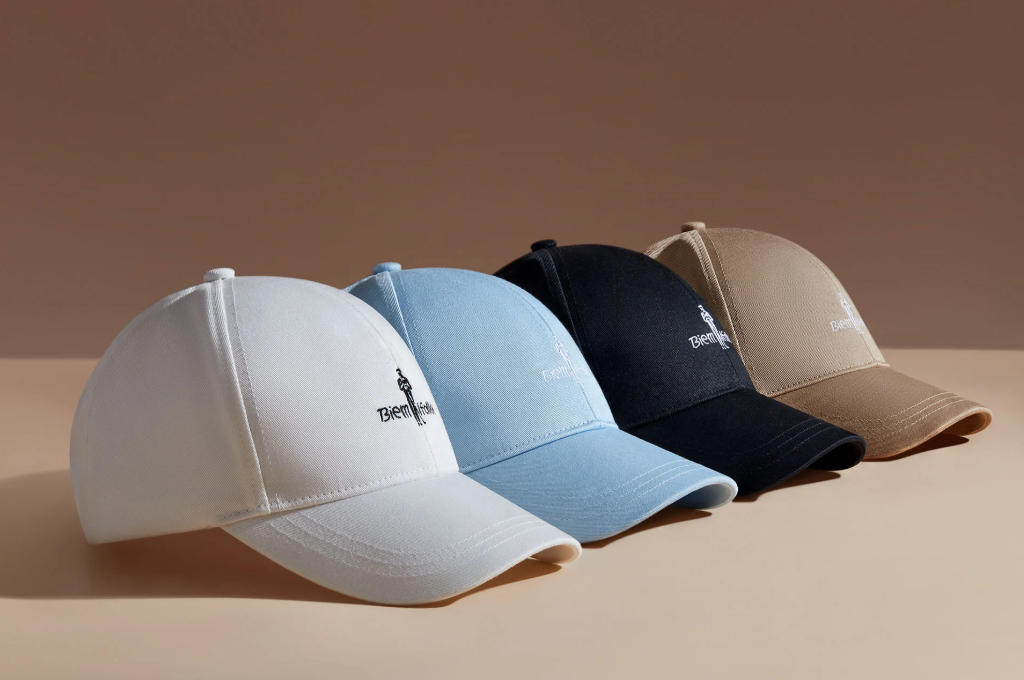
BIEMLOFEN’s current hat collection, for example, combines a gentleman emblem with classic and macaron color systems, while metal hardware at the adjustable strap adds another recognizable detail. Its separate cotton golf hat range also uses exclusive patterns and collaborative graphics as part of a broader coordinated clothing collection.
This leads to an important design principle:
Strong branded headwear depends on consistent visual language, not simply larger logos.
A recognizable golf hat brand can create identity through proportion and detail even when branding is relatively understated. In premium sportswear, that restraint can sometimes make the design feel more considered rather than less distinctive.
“Breathable fabric” is often used as if it explains the entire comfort system of a cap. In reality, airflow depends on how the whole hat is constructed.
BIEMLOFEN’s current breathable golf hat provides a useful example. The front uses lightweight polyester combined with double-layer perforated polyester mesh, while four single-layer square-grid mesh panels are positioned at the rear.
Different parts of the hat therefore perform different jobs:
Front structure and rear ventilation: The front panel helps maintain shape and provides a stable area for branding, while mesh sections increase the potential for air movement.
Fit and sweat management: Crown volume, ventilation openings, internal contact areas and closure adjustment all influence how heat and moisture feel during prolonged wear.
This is why a breathable golf cap should be viewed as a system. Fabric permeability matters, but panel layout, mesh area, sweat management and fit also influence how effectively heat can escape.
A highly breathable material used in a poorly ventilated structure may not create the same experience as a hat designed around airflow from the beginning.
Color may be one of the fastest ways for a golf hat to change the mood of an outfit.
Neutral shades such as white, navy, black or beige often reinforce the understated side of traditional golf style. They pair easily with polos and outerwear and usually allow the rest of the outfit to take visual priority.
Brighter or softer seasonal shades create a different impression. Pastels and macaron-inspired colors can feel lighter and more relaxed, while saturated colors can make the cap an intentional focal point.
BIEMLOFEN’s current hat collection deliberately presents both classic retro colors and macaron colors, using the two palettes to communicate different interpretations of golf aesthetics.
Contrast details can push this further. Embroidery, a different-colored brim edge or small metallic elements can create visual separation without turning the entire hat into a graphic statement.
For this reason, color selection is not just about matching a polo. It influences whether the same cap appears traditional, sporty, youthful, resort-oriented or more fashion-forward.
Fit affects more than whether a hat falls off.
During the golf swing, a cap should remain stable without creating excessive pressure around the head. Over several hours, a slightly poor fit can become increasingly noticeable, particularly in warm conditions.
Fit also changes appearance. Crown height influences head and face proportions, while brim angle affects both the visual shape of the cap and the wearer's sight line. A very low crown creates a different silhouette from a more structured baseball-style shape.
Closure design therefore has both practical and visual consequences. BIEMLOFEN’s current hat uses a magic-tape adjustable strap, allowing the wearer to alter the fit while retaining the intended overall structure.
The important point is that fit is not only about whether the hat stays in place; it affects stability, comfort and the overall silhouette of a golf outfit.
That is particularly relevant for branded headwear, because the shape of the cap influences how the logo, embroidery and other identity elements are presented.
Compared with many other pieces of golf apparel, the cap has a relatively low barrier to everyday use.
A technical pair of golf trousers may still look strongly associated with the sport, but a well-designed cap can move easily from a round of golf into weekend casualwear, resort travel, outdoor activities or city dressing.
On the course, a cap works naturally with a polo and golf trousers or shorts. Away from the fairway, the same hat can be paired with a T-shirt, hoodie or lightweight jacket.
That crossover is already part of BIEMLOFEN’s positioning. Its branded golf hats are described as integrating outdoor functional technology into everyday attire, while the broader brand positions itself across both professional golf and fashion golf.
The cap therefore becomes one of the easiest ways for golf aesthetics to enter everyday sports-lifestyle fashion without requiring the wearer to look as though they are heading directly to the first tee.
Golf hats may occupy relatively little space in an outfit, but their function and visual influence are considerable.
Construction determines airflow and comfort. Fit influences stability and silhouette. Color changes the character of an outfit, while embroidery, hardware and recurring design details transform a functional cap into an expression of identity.
That combination explains why branded golf hats have moved naturally beyond the fairway. The strongest designs are not simply caps with logos added to them; they integrate performance, proportion and recognizable visual language into one of golf fashion’s most visible accessories.
A branded golf hat uses consistent design elements such as logos, embroidery, colors, hardware and silhouette to express a recognizable identity in addition to providing functional headwear.
Golf hats provide shade and outdoor comfort while also allowing golfers to express personal, team, club or brand identity.
Lightweight fabrics and mesh can support airflow, but panel construction, ventilation area and fit also contribute to overall breathability.
It should feel secure enough to remain stable during movement without creating excessive pressure during several hours of wear.
Yes. Their familiar cap silhouette makes them easy to combine with casual, travel and outdoor clothing as well as golf apparel.
Yes. Neutral colors generally create a more understated look, while brighter, pastel or contrasting colors can make the cap a stronger part of the outfit’s visual identity.
Biemlofen Building, 608 Xingye Dadao East, Panyu District,
Guangzhou City, Guangdong Province, China.
+86-020-34765888

 English