


A golf dress sits at the intersection of performance sportswear and polished lifestyle fashion. Unlike an everyday dress, it needs to support walking, bending and a full golf swing while maintaining the clean, refined appearance traditionally associated with the course.
That combination explains the growing appeal of golf dresses for women. A well-designed golf dress can move naturally through a round of golf, transition into the clubhouse and still feel appropriate for resort, travel or casual social settings. The strongest designs are therefore not simply fashionable dresses adapted for golf; they are garments developed around movement, fabric performance and silhouette.
The biggest difference is functional expectation.
An everyday dress may be designed primarily around silhouette, drape or visual styling. A golf dress has to perform while the wearer rotates through the shoulders and torso, walks several kilometers, bends to read a putt and moves repeatedly throughout the day.
A functional golf dress therefore needs to balance several requirements:
Movement and comfort: Stretch and thoughtful construction should allow shoulder, torso and hip movement without excessive pulling.
Breathability and moisture management: Outdoor play can involve heat, sunlight and sustained activity, making fabric comfort especially important.
Coverage and shape retention: The garment should remain comfortable and maintain its intended silhouette during walking, sitting and swinging.
Polished appearance: Golf apparel still carries a strong visual tradition, so collars, proportions and clean lines often remain important design elements.
In simple terms, a golf dress differs from an everyday dress because it combines unrestricted movement, breathability, coverage and shape retention with the polished appearance associated with golf.
BIEMLOFEN's women's dress range reflects this balance by combining stretch and breathable fabric characteristics with silhouettes designed for both golf and lifestyle use.
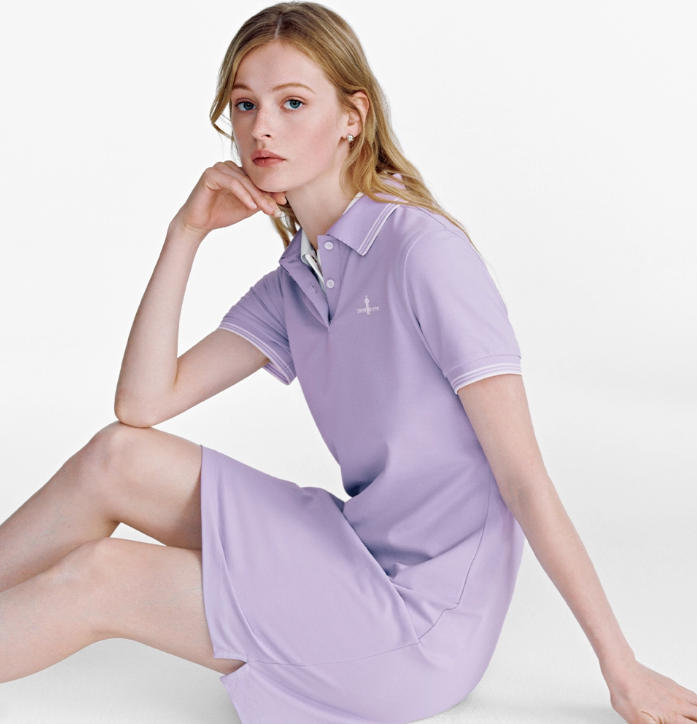
A polo golf dress offers a different styling experience from the traditional combination of a golf polo with a skirt or shorts.
The dress creates a continuous one-piece silhouette, which can make an outfit feel cleaner and more streamlined. A separate polo and bottom, however, gives the wearer more flexibility to combine colors, fabrics and layers.
| Factor | Golf Dress | Polo + Skirt/Shorts |
|---|---|---|
| Styling | One-piece | Mix-and-match |
| Visual continuity | Strong | More flexible |
| Dressing simplicity | High | Moderate |
| Layering flexibility | Moderate | Higher |
| Fashion expression | Silhouette-focused | Combination-focused |
| Course-to-social transition | Strong | Strong |
Neither format is automatically better.
A golfer who prefers simple styling and a continuous silhouette may naturally favor a dress. Someone who wants to adjust layers or create multiple outfits from separate pieces may prefer a polo-and-skirt combination.
BIEMLOFEN's Polo Golf Dress follows the first approach, using a streamlined silhouette and multiple color options to combine classic golf references with a more contemporary fashion direction.
Stretch is often used as a general marketing term in sportswear, but golf requires a more specific type of movement.
The swing moves through backswing, rotation, impact and follow-through. During that sequence, fabric around the shoulders, upper back, waist and hips is repeatedly placed under tension. Walking and bending add further movement throughout a round.
For that reason, stretch alone is not enough.
Stretch describes how much a fabric can extend, while recovery describes how effectively it returns to its original shape afterward. A fabric may feel highly elastic during the first few swings but still lose its intended silhouette if recovery is weak.
This matters particularly in a golf dress because the garment has to function as both sportswear and fashion. High stretch without sufficient recovery may improve mobility temporarily but can compromise shape after prolonged wear.
The goal is therefore not maximum elasticity. It is an appropriate balance between freedom of movement, structure and recovery.
Silhouette has a stronger functional role in golf clothing than it may first appear.
A straighter cut can create a clean, athletic appearance and allow the garment to fall naturally during movement. A slightly shaped waist creates more definition while still allowing mobility when the pattern and fabric are engineered appropriately.
Collar design also changes the character of the dress. A classic polo collar connects closely with traditional golf style, while smaller or more modern collar shapes can shift the garment toward contemporary sports fashion.
Hem length is equally important. It influences visual proportion, but also affects walking, sitting, bending and overall comfort on the course. The most successful design is therefore not simply the shortest, longest or most fitted silhouette; it is the one that balances movement and appearance for its intended setting.
This is why a women's golf dress should be evaluated as a complete garment rather than as a polo shirt extended into a skirt.
One reason golf dresses have become increasingly relevant to sports lifestyle fashion is their ability to move between different environments.
On the course, the priorities are mobility, comfort and performance. In the clubhouse, the same clean silhouette can create a more polished look without requiring a complete outfit change.
At a golf resort, the dress can move naturally from a morning round into lunch or a casual afternoon. For travel, the one-piece format also reduces the need to coordinate multiple garments while still maintaining a put-together appearance.
This course-to-lifestyle flexibility is especially important in modern golf fashion. The sport is no longer represented only by highly traditional uniforms; it increasingly overlaps with resort wear, premium casualwear and everyday athletic fashion.
That makes the golf dress more than a functional piece of sportswear. It becomes part of a broader lifestyle wardrobe.
The same dress can also take on a different character depending on weather and accessories.
In hot weather, lightweight fabrics and simpler styling help maintain a clean, comfortable look. On cooler mornings or windy days, adding a women's golf jacket provides an extra layer without changing the basic silhouette.
For resort golf, stronger colors or more expressive patterns can create a more relaxed mood. A minimalist look can rely on a solid-color dress with understated accessories and clean golf shoes.
The principle is simple: the dress provides the foundation, while outerwear, footwear and accessories adapt the outfit to the setting.
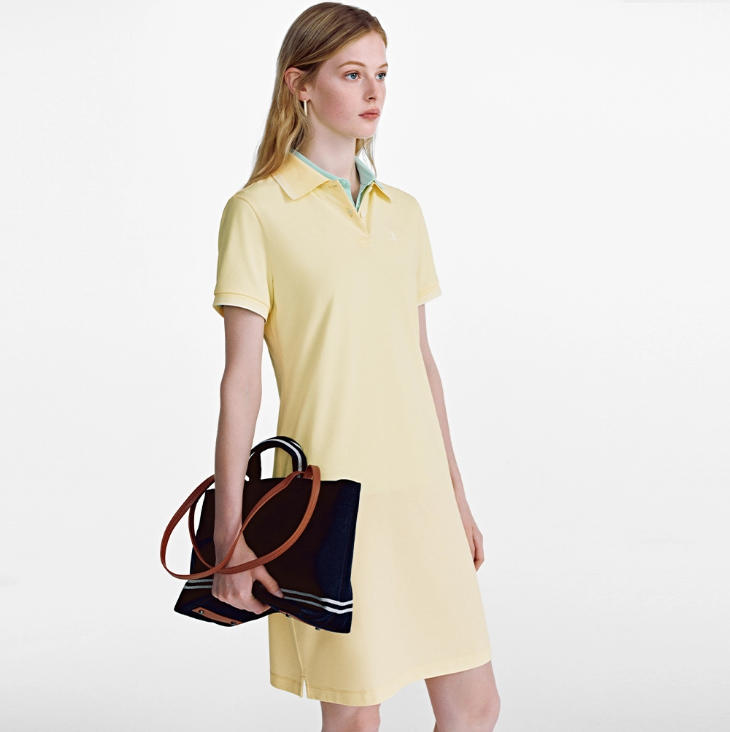
The modern golf dress succeeds because it does not force women to choose between movement and refinement.
Stretch, recovery, breathability and functional construction support the physical requirements of golf, while silhouette, color and collar design create a polished appearance that works beyond the fairway.
For women who value a streamlined one-piece outfit, golf dresses offer a distinctive alternative to the traditional polo-and-skirt combination—and one that fits naturally into the broader world of contemporary sports lifestyle fashion.
A golf dress is designed to support movement, breathability, coverage and shape retention while maintaining a polished course-appropriate appearance.
Yes. A dress specifically designed for golf can provide the mobility and comfort required for playing while maintaining an appropriate golf silhouette.
Fabrics that combine breathability, stretch and good recovery are particularly suitable because they support movement while helping the garment retain its shape.
A polo golf dress creates a one-piece silhouette, while a polo and skirt or shorts provide more mix-and-match and layering flexibility.
It should allow comfortable shoulder, torso and hip rotation without excessive pulling, while still retaining its intended silhouette.
Yes. Their clean styling makes many golf dresses suitable for clubhouses, resorts, travel and casual social settings as well as the course.
Biemlofen Building, 608 Xingye Dadao East, Panyu District,
Guangzhou City, Guangdong Province, China.
+86-020-34765888

 English